Chest pain, gas ka dard, ya kuch aur bhi seriously wrong? Jaanein heart attack ki alamat aur kab foran 1122 call karna zaroori hai.
It is nine at night. A man finishes dinner, sits back, and feels a heaviness settle in his chest. Someone fetches an antacid. Someone else says it is the biryani. Twenty minutes pass while the family debates whether to bother a doctor at this hour. Then someone starts the car for the clinic down the road. The option to call 1123 is always available for free medical consultation and saves you the commute hassle.
Those twenty minutes are the most dangerous part of the story, and it repeats in homes across Sindh every night. Knowing heart attack ki alamat is what closes that gap. A heart attack happens when blood flow to part of the heart is blocked, and the starved muscle begins to die within minutes. Delay is not neutral. It costs heart tissue that never grows back.
If chest pain feels new, severe, or simply wrong, do not diagnose it at the dinner table. Call 1122, the free ambulance number in Sindh.
The most common sign is discomfort in the centre or left side of the chest. Often, it may last several minutes, fade, and return. People describe it as pressure, squeezing, fullness, tightness, burning, or a heavy weight rather than a sharp stab.
Other dil ka dora ki alamat include:
Nobody gets every symptom, and the pain doesn’t have to stay on the left. So, any new chest pressure combined with sweating, breathlessness, or spreading pain is a chest pain emergency.
Call 1122 immediately if chest discomfort:
Do not wait to see whether it settles, because mild symptoms and severe ones can come from the same blocked artery.
The heart attack vs gas ka dard question has no safe answer at home. Both can burn, and both can press. Either can also cause nausea and upper abdominal discomfort. So, only a medical assessment truly settles it.
Treat these as clues, not rules. An antacid easing the pain does not prove the heart is safe, and pain that feels exactly like indigestion can still be a heart attack. When you are unsure, call 1122.
Families delay because they are embarrassed to call an ambulance “for gas”. Avoid these:
A false alarm costs you an hour, but a delay can cost a life.
Chest discomfort is still common in women, but heart attack symptoms in women are easier to explain away as stress, weakness, or a bad stomach.
Women may experience:
A woman may feel drained, breathless, and nauseated with no dramatic chest pain at all. Even so, that combination still needs an ambulance.
This is the section most articles skip, and in Pakistan it matters most. Diabetes damages the nerves that carry pain signals, so a person with long-standing diabetes can have a heart attack with little or no chest pain. Roughly one in three Pakistani adults lives with diabetes, which makes silent presentations common here rather than rare.
If someone with diabetes suddenly becomes breathless, sweaty, confused, unusually weak or nauseated for no clear reason, then do not wait for chest pain that may never arrive. Call 1122.
Heart attacks aren’t an old person’s problem in South Asia: people here develop coronary disease about a decade earlier than Western populations, and cardiovascular disease is the leading cause of death in Pakistan, responsible for roughly 30% of all fatalities.
A man in his late thirties with a smoking habit, high blood pressure, or a family history is not too young. So, treat the symptoms, not the age on the CNIC.
Heart muscle starts dying within minutes of a blockage, and the damage widens the longer the artery stays shut. The first hour after symptoms begin is when treatment saves the most muscle, which is why rapid emergency response and rapid prehospital medical care change outcomes more than the choice of hospital does.
The clock does not start when you reach the hospital. It starts at the first symptom.
Call 1122 first. Give the location, a working phone number, and the symptoms. Say clearly if the person is unconscious, struggling to breathe, or has known heart disease.
If the person stops responding and is not breathing normally, start CPR. Push hard and fast in the centre of the chest, roughly 100 to 120 compressions a minute, and do not stop until help arrives. Even if you have never been trained, the dispatcher can talk you through it, and SIEHS runs Basic Life Support and first aid training for exactly this moment.
Call 1122 before anything else. Aspirin is not safe for everyone and can cause harm in people with allergies, bleeding disorders or certain other emergencies. Never delay the call to look for it. Give it only if the dispatcher or a qualified healthcare professional tells you to, and if the patient already has prescribed heart medicine, follow their existing instructions or the dispatcher’s guidance.
This is what stops most families from dialling, so here it is plainly. The SIEHS-1122 Emergency Ambulance Service is free. There is no charge for the call, the crew, or the journey. Sindh Integrated Emergency and Health Services (SIEHS) is a non-profit emergency healthcare organisation, and the service runs 24/7 emergency ambulance response every day of the year.
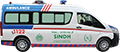
What arrives is not a van with a stretcher. Every ambulance carries 29 items of life-saving equipment: an ICU-on-wheels setup that includes a cardiac monitor and defibrillator, ventilator, oxygen, and emergency medication. Emergency medical technicians trained in advanced life support systems begin treatment at your doorstep, make a preliminary diagnosis, and can restart a heart that stops on the way.
In short, that is the real argument against driving yourself. A private car in Karachi traffic has a steering wheel and a horn. So, if the heart goes into a dangerous rhythm on Shahrah-e-Faisal, nothing in that car can bring it back.
For anything that is worrying but not an emergency, chest discomfort you want checked, blood pressure that keeps climbing, medication questions, call Tele-Tabeeb 1123. The 24 hour telemedicine platform connects you to a qualified doctor by phone at no cost, and it is part of the same community healthcare programs across Pakistan. However, it is not a substitute for an ambulance when symptoms are severe.
Risk climbs with smoking, paan and gutka, diabetes, high blood pressure, high cholesterol, obesity, physical inactivity and a family history of early heart disease. However, most of these are manageable, and the single most useful step after a scare is a proper check-up rather than a resolution to be careful.
Remember: you are not expected to diagnose a heart attack. Instead, you are only expected to recognise that something is wrong and pick up the phone. Calling 1122 costs nothing, brings a defibrillator to your door, and buys back the minutes that decide how much heart muscle survives.
Chest pressure, spreading pain, breathlessness, cold sweat, nausea, or sudden collapse in strength are heart attack ki alamat until a doctor proves otherwise. Gas causes chest discomfort too, and the two overlap far too much to gamble on.
Save 1122 and download the HOPE 24/7 App in your phone. Tell the people you live with why.
A: Chest pressure or heaviness, pain spreading to the arm, jaw, neck or back, breathlessness, cold sweat, nausea, dizziness and sudden weakness. Symptoms can be mild, can come and go, and can begin while the person is resting. Any combination of these needs an emergency call, not an antacid.
A: Yes. The service is free with no charge for the call, treatment, or transport, and it operates across 30 districts of Sindh including Karachi, Hyderabad, Sukkur, Larkana, Mirpurkhas, Tharparkar, Nawabshah, and Dadu.
A: Give the exact location with a nearby landmark, a phone number that stays reachable, the patient’s age, what the symptoms are and when they started. Mention unconsciousness, breathing difficulty, or known heart disease or diabetes straight away. Stay on the line, because the dispatcher can guide you through CPR while the crew is moving.
A: Yes, and this is common. Diabetes can blunt the nerve signals that produce chest pain, so the warning may instead be sudden breathlessness, sweating, confusion, extreme weakness, or nausea. Treat those symptoms in a diabetic patient as seriously as chest pain.
A: Wait for the ambulance. A heart rhythm can collapse within minutes, and a private car carries no cardiac monitor, no defibrillator and no trained technician. The SIEHS crew begins treatment at your home and continues it throughout the journey, which a family car cannot do at any speed.
Chest pain mehsoos ho, ya seenay mein ajeeb lagay to ghar par faisla na karein. Foran call karein.
This article provides general health information. It does not replace examination, diagnosis or emergency medical advice from a qualified professional.
WhatsApp us