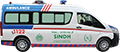
Choking can turn dangerous in minutes. Learn the 5 and 5 method for adults and children, the different steps for babies, and when to call 1122.
Choking happens when food, a small toy or another object blocks the airway. A person who is choking can quickly become unresponsive, so it is important to act fast. This guide explains what to do for adults, children and babies while help is on the way.
If someone cannot speak, cry, cough or breathe, send a bystander to call 1122 (free, 24/7) while you start first aid. If you are alone with an adult or child, shout for help and start first aid first.
Not every cough is an emergency. Ask the person: “Are you choking? Can you speak?”
If a mild case gets worse, be ready to act straight away.
Send a bystander to call 1122 while you begin first aid. When the call connects, say clearly that someone is choking and share your exact location. Not sure of the address? Read how to help 1122 find you faster.
Remember: SIEHS 1122 is for emergencies like this one. Tele-Tabeeb 1123 is the free medical advice line, which is useful after the emergency is over.
This is the “5 and 5” method taught by the Red Cross. It works for adults and for children over 1 year old.
Give chest thrusts instead of abdominal thrusts. A trainer can show you the exact hand position.
Never give abdominal thrusts to a baby. Use back blows and chest thrusts instead. If the baby is coughing hard or crying strongly, do not step in. Strong coughs and cries can push the object out.
Practising on a training doll, with a trainer, is the safest way to learn the baby hold and the chest thrusts.
If the person stops responding, lower them to a firm, flat surface and make sure 1122 has been called. Then begin CPR, starting with chest compressions. For a baby, give infant CPR.
If you are trained, each time before you give breaths, open the mouth and look for the object. Remove it only if you can see it. Never sweep your finger blindly inside the mouth.
Want to learn CPR properly? See how SIEHS DRDE trains communities in first aid and CPR.
Call 1122 if you can. Then give yourself abdominal thrusts: make a fist just above your navel, cover it with your other hand and press sharply inward and upward.
You can also lean over a firm object, such as the back of a chair, and press your stomach against it. Avoid anything with a sharp edge or corner.
Even if the person seems fine afterwards, they should see a doctor. Choking, and the first aid used to clear it, can cause complications. For babies and children, call or visit a doctor as well.
Not sure what to do next? Tele-Tabeeb 1123 is free and open 24/7, and a doctor can guide you on whether emergency care is needed.
Reading helps, but hands-on practice makes the steps automatic when it matters. SIEHS DRDE runs first aid and CPR training that covers responding to choking in adults and children. Read more about why life-saving skills should be taught beyond hospitals.
Check whether they can cough or speak. If they cannot speak, cry, cough or breathe, send someone to call 1122 and start first aid straight away. If they are coughing forcefully and can speak, encourage them to keep coughing and stay with them.
For adults and children over 1 year, give 5 firm back blows between the shoulder blades, then 5 abdominal thrusts. Keep alternating 5 and 5 until the object comes out, the person can cough, cry or speak, or they become unresponsive.
Never give abdominal thrusts to a baby. Lay the baby face down along your forearm with the head lower than the body and give up to 5 firm back blows. Then turn the baby face up and give 5 quick chest thrusts. Keep alternating until the object comes out or the baby becomes unresponsive.
Give chest thrusts instead of abdominal thrusts. A first aid trainer can show you the correct hand position.
Call 1122 if you can. Then give yourself abdominal thrusts with your fist above your navel, or lean over a firm object such as the back of a chair and press your stomach against it. Avoid sharp edges.
Yes. Choking and the first aid used to clear it can cause complications, so the person should see a doctor even if they seem fine. Tele-Tabeeb 1123 is free and open 24/7 if you need guidance on what to do next.
Put them in your phone and teach them to your family.
Tele-Tabeeb, Har Waqt Qareeb
SIEHS provides free ambulance and tele-health services. You can support this work with a donation, or work out your Zakat with our calculator.
This article gives general first aid information. It does not replace hands-on training or medical advice.
WhatsApp us