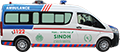
CPR stands for cardiopulmonary resuscitation. If an adult is unresponsive and not breathing normally, call 1122 and start CPR straight away.
Put the heel of one hand on the middle of the chest, your other hand on top, keep your arms straight and press down about 5 to 6 cm at a rate of 100 to 120 compressions a minute. Let the chest come back up after every push.
Do not waste time checking for a pulse. Keep going until the 1122 team takes over or the person starts breathing normally.
Dil achanak band ho jaye to har second qeemti hota hai. Ambulance raaste mein ho, tab bhi aap ke haath us waqt kisi ki jaan bacha sakte hain.
Cardiopulmonary resuscitation (CPR) sounds like something only doctors do. It is not. This guide explains what CPR is, when to start it, and exactly how to do it step by step until help arrives.
CPR is a first aid technique that combines chest compressions and, for people who are trained, rescue breaths. St John Ambulance describes it as giving a person the best chance of survival following a cardiac arrest.
The American Heart Association teaches a simpler version for the public called Hands-Only CPR: call for emergency help and push hard and fast on the chest. According to the AHA, Hands-Only CPR can potentially double or triple a person’s chance of survival.
The American Heart Association says people who are not healthcare professionals should not take time to check for a pulse. If an adult suddenly collapses, or an unresponsive person is not breathing normally, start CPR.
Pulse dhoondne mein waqt zaya na karein. Saans theek nahi to foran CPR shuru karein.
Zor se aur tezi se dabayein, aur har dafa chest ko wapas upar aane dein. Agar koi saath hai to har 1 se 2 minute baad baari badal lein, taake aap thak na jayein.
If you are trained and willing, give 2 rescue breaths after every 30 compressions. If you cannot or do not want to give breaths, keep doing chest compressions only. Do not stop pushing.
If a defibrillator (AED) is available nearby, ask a helper to bring it while you keep going. Do not leave the person to fetch it yourself if you are alone.
Hands-Only CPR is meant for teens and adults who suddenly collapse. The American Heart Association recommends conventional CPR, with breaths, for infants, children, and anyone who collapsed after drowning, a drug overdose or breathing problems. These techniques are different and are best learned in a proper training session.
For babies and children who are choking, read our guide on choking first aid for adults and children.
A: CPR stands for cardiopulmonary resuscitation. It is a first aid technique that uses chest compressions, and rescue breaths for people who are trained, to give a person the best chance of survival after a cardiac arrest. If an adult is unresponsive and not breathing normally, call 1122 and start CPR straight away.
A: Kneel beside the person and put the heel of one hand on the middle of their chest, with your other hand on top. Keep your arms straight and your shoulders over your hands, then press down about 5 to 6 cm at a rate of 100 to 120 compressions a minute, letting the chest come back up fully after each push.
A: You can still help without formal training. The American Heart Association teaches Hands-Only CPR for the public in two steps: call for emergency help and push hard and fast on the chest. Rescue breaths should only be given by people who are trained and willing. Practising on a manikin in a training session builds confidence, and SIEHS runs first aid and CPR training sessions.
A: No. The American Heart Association says people who are not healthcare professionals should not take time to check for a pulse. Check for a response and for normal breathing for up to 10 seconds. If the person is not breathing normally, call 1122 and start CPR.
Reading the steps helps, but practising them is what builds confidence. SIEHS trainers run sessions where people practise chest compressions and learn the steps of using an AED on manikins.
Read more about how SIEHS DRDE is training communities for safer emergency response.
SIEHS 1122 ambulances are free for emergencies in Sindh. Tele-Tabeeb 1123 is available 24/7, nationwide, in Urdu and English.
SIEHS runs on your support. Every donation helps keep the ambulance moving and the doctor on the line, free, for the families who need it most. You can also calculate your Zakat and give in one step.
This article is for general information and does not replace CPR training or medical advice. In an emergency, call 1122.
WhatsApp us