A person may visit a doctor for headaches, chest tightness, stomach pain, poor sleep, or constant tiredness without realising that mental health may be part of the problem. Stress, anxiety, depression, grief, and emotional pressure can affect the body in very real ways.
For many people in Pakistan, these signs are often ignored as “just tension”. However, the mind and body work together. Therefore, caring for mental health and emotional wellbeing is also part of caring for physical health.
Mental health refers to emotional, psychological, and social wellbeing. It affects how a person thinks, feels, studies, works, handles stress, and connects with others.
Good mental health does not mean feeling happy all the time. Everyone feels sadness, worry, anger, or fear. The concern begins when these feelings become intense, constant, or difficult to manage.
The World Health Organization explains that mental health helps people cope with life’s stresses, use their abilities, learn, work, and contribute to their community.
Mental health affects the body through sleep, hormones, appetite, the nervous system, the immune system, and daily habits. When the brain stays under stress for too long, the body also reacts.
For example, stress can cause headaches, dizziness, muscle tension, stomach problems, chest pain, and a faster heartbeat. The NHS lists these as common physical symptoms of stress.
In simple terms, the body can show signs of emotional pressure before a person understands what they are feeling.
Mental health concerns can appear through physical symptoms. This can confuse people because the pain or discomfort feels medical, not emotional.
These symptoms should not be dismissed. A doctor can help rule out physical illness, while a mental health professional can help identify emotional causes.
Stress activates the body’s alarm system. In short bursts, this can help a person respond to danger or pressure. However, when stress continues for days, weeks, or months, the body may remain tense.
As a result, a person may feel restless, tired, irritable, or physically unwell. Long-term stress can disturb sleep, tighten muscles, affect digestion, change appetite, and make daily tasks feel heavier.
This is why mental health care should not be delayed until symptoms become severe.
Stress, anxiety, and depression can make it hard to fall asleep. Some people wake up repeatedly during the night. Others sleep for long hours but still feel tired.
Poor sleep then affects concentration, appetite, mood, immunity, and energy. As a result, a person may feel physically weak even without a clear illness.
Mental pressure can tighten muscles in the neck, shoulders, back, and jaw. This may lead to frequent headaches, stiffness, or unexplained pain.
Many people take painkillers again and again without addressing the stress behind the pain. However, if pain keeps returning, both physical and emotional causes should be considered.
The brain and gut are closely connected. Therefore, anxiety and stress can affect digestion.
Some people experience acidity, nausea, bloating, constipation, diarrhoea, or stomach cramps during emotional distress. For example, a student may feel stomach pain before an exam. An employee may feel nausea before a difficult meeting.
These symptoms are real. They are not “just imagination”.
Long-term stress can leave the body feeling drained. A person may catch colds more often, recover slowly, or feel tired after small tasks.
People living with long-term physical illness may also face anxiety or depression. At the same time, untreated mental health concerns can make it harder to follow medication, sleep well, eat properly, and attend check-ups.
Stress and anxiety can cause a racing heart, sweating, trembling, chest tightness, or shortness of breath. Sometimes these symptoms feel similar to a heart problem.
However, chest pain should never be ignored. If someone has heart attack symptoms, such as severe chest pain, sweating, breathlessness, pain in the arm or jaw, or sudden weakness, urgent help is needed.
In Pakistan, people often delay help because they think it is “only tension”. That delay can be risky.
Mental health can affect eating habits. Some people lose their appetite when stressed. Others eat more than usual, especially sugary or oily foods.
Over time, this can lead to weight changes, low energy, poor nutrition, and other health concerns.
Emotional distress can make even simple tasks feel heavy. A person may feel tired after waking up, avoid daily responsibilities, or lose interest in routine activities.
This tiredness is not laziness. It can be a sign that the mind and body need support.
Emotional wellbeing helps people understand, manage, and express emotions in a healthier way. It also supports better decisions, stronger relationships, and improved daily functioning.
When emotional wellbeing is neglected, stress can build silently. As a result, the body may begin showing warning signs through poor sleep, pain, digestive problems, chest tightness, or fatigue.
Good emotional wellbeing helps a person respond to pressure without breaking down physically or mentally.
In Pakistan, many people avoid discussing mental health because of shame, fear, or misunderstanding. Some may say:
“Bas tension hai.”“Log kya kahenge?”“Strong bano, itna mat socho.”
Faith, family, and resilience can provide support. However, they should not replace proper care when symptoms become serious.
Mental health concerns deserve the same attention as fever, diabetes, asthma, or blood pressure. Asking for help is not weakness. It is a responsible step towards recovery.
Children and teenagers may not always explain stress, anxiety, or sadness clearly. Instead, they may show changes in sleep, appetite, behaviour, school performance, anger, fear, or social withdrawal.
The CDC explains that while fears and sadness can be normal in children, persistent or extreme fear and sadness may point towards anxiety or depression.
Parents and caregivers should seek guidance if a child’s emotional changes are severe, frequent, or affecting daily life. Early support can help prevent symptoms from becoming harder to manage.
Through the Tele-Tabeeb 1123 Telemedicine Service, people can receive non-emergency medical guidance and mental health counselling without visiting a hospital. It works as a 24-hour telemedicine platform for people who need timely advice, counselling, or referral support.
When a caller describes personal distress or mental health concerns, the Health Advisor and Information Officer first screens the call and routes it to a Counselling Officer. If there are signs of crisis or immediate self-harm risk, the caller is marked High Priority, kept engaged on the line, given mental health first aid, and connected to a Counselling Officer as soon as possible.
During the first session, the Counselling Officer takes verbal consent, records basic details, listens to the concern, checks substance use where relevant, and conducts suicide pre-screening. Tele-Tabeeb also uses Urdu PHQ-9 and GAD-7 tools to assess depression and anxiety symptoms.
The counsellor then looks at daily functioning, red flags, and symptom severity. Mild cases may receive short-term counselling. Moderate or severe cases may be referred for psychotherapy or psychiatric support. Urgent risk is escalated to emergency services.
Some mental health situations need urgent support. If someone talks about self-harm, suicide, or feeling unsafe, do not leave them alone.
Also, do not assume every physical symptom is stress. Some signs need immediate medical attention, including:
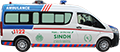
In such cases, people in Sindh can call the SIEHS 1122 Emergency Ambulance Service for urgent help.
Call Tele-Tabeeb 1123 for non-emergency guidance. This may include stress-related symptoms, emotional distress, sleep problems, general health questions, or counselling support.
Call SIEHS 1122 when there is an emergency. This includes chest pain, breathing difficulty, loss of consciousness, stroke symptoms, severe bleeding, trauma injuries, or severe road accidents.
For urgent medical emergencies, the Free Emergency Ambulance Service in Sindh – SIEHS 1122 provides free ambulance support and rapid emergency response.
Sindh Integrated Emergency & Health Services (SIEHS) provides Emergency Health Services in Sindh through free ambulance and telemedicine support. For emergencies, SIEHS 1122 offers 24/7 emergency ambulance response and rapid pre-hospital medical care across the province.
The service supports free emergency ambulance services through trained emergency medical technicians, equipped ambulances, and advanced life-support systems where required.
SIEHS supports emergency response across Karachi, Hyderabad, Sukkur, Larkana, Mirpurkhas, Tharparkar, Nawabshah, Dadu, and other districts of Sindh. For people searching for ambulance service Karachi, emergency ambulance Hyderabad, or Free ambulance Sindh, the ambulance number is 1122.
SIEHS also supports community healthcare programmes across Sindh, helping people understand health risks, emergency response, prevention, and timely care.
Seek help if stress, anxiety, sadness, or fear continues for more than two weeks and affects daily life.
Important warning signs include:
If someone is at immediate risk of self-harm, contact emergency support or go to the nearest healthcare facility.
Many people keep pushing through headaches, chest tightness, stomach pain, or fatigue. However, repeated symptoms need attention.
A doctor can help rule out physical illness. A mental health professional can also help identify emotional causes.
Some people use sleeping pills, painkillers, or calming medicines without medical advice. This can be dangerous.
Medicines should only be taken under professional guidance.
Mental health issues usually become harder to manage when ignored. Early support can prevent symptoms from worsening.
Counselling or therapy can help with stress, grief, relationship issues, burnout, anxiety, and emotional pressure. A person does not need to “break down” before seeking help.
Sleep and wake up at regular times. Avoid using your phone right before bed. Keep caffeine low in the evening.
Even small sleep improvements can support mood, energy, and focus.
You do not need a gym. A walk, light stretching, housework, or simple movement can help reduce stress.
Regular movement also supports heart health, digestion, and better sleep.
Talking can reduce emotional pressure. Speak to a family member, friend, doctor, counsellor, or helpline.
Keeping everything inside often makes stress heavier.
Try not to skip meals during stress. Include water, fruits, vegetables, lentils, eggs, yoghurt, or other balanced foods where possible.
Food does not cure mental health issues, but it supports the body during difficult times.
Limit doom-scrolling, late-night arguments, and constant exposure to distressing content. Also, take short breaks during work or study.
A calmer routine can help the nervous system settle.
Mental health and physical health are deeply connected. Stress, anxiety, depression, and poor emotional wellbeing can affect sleep, digestion, immunity, heart symptoms, pain, and daily energy.
Paying attention to early physical signs can help people seek support before stress becomes harder to manage. Simple habits, timely advice, counselling, and professional care can protect both the mind and body.
Yes. Mental health can affect sleep, digestion, appetite, energy, body pain, heart rate, and daily functioning. Stress, anxiety, depression, and emotional pressure can cause real physical symptoms such as headaches, chest tightness, stomach pain, fatigue, and poor sleep.
Call Tele-Tabeeb 1123 for non-emergency mental health guidance, emotional distress, stress-related symptoms, sleep problems, anxiety, low mood, or counselling support. It is suitable when the person is stable but needs timely advice.
Call SIEHS 1122 when there is a medical emergency. This includes severe chest pain, breathing difficulty, loss of consciousness, stroke symptoms, severe bleeding, trauma injuries, severe road accidents, or immediate risk of self-harm.
The ambulance number in Sindh is 1122. For emergencies, SIEHS 1122 provides free emergency ambulance services and rapid emergency response across Sindh.
Yes. People can call Tele-Tabeeb 1123 for non-emergency guidance if they have stress-related symptoms such as headaches, poor sleep, stomach discomfort, fatigue, anxiety, or emotional pressure. If symptoms are sudden, severe, or life-threatening, call 1122.
Tele-Tabeeb 1123 can support initial screening, guidance, and referral advice. For mental health concerns, trained staff may assess symptoms and suggest the next step. However, this does not replace a full clinical evaluation by a doctor, psychiatrist, or mental health professional.
Do not leave the person alone. Stay with them, listen calmly, and seek urgent support. If there is immediate danger, call SIEHS 1122 or take the person to the nearest emergency facility. For non-emergency counselling guidance, call Tele-Tabeeb 1123.
Yes. SIEHS 1122 provides free emergency ambulance services in Sindh, including rapid pre-hospital medical care and patient transport during emergencies.
Yes. Parents and caregivers can call Tele-Tabeeb 1123 if a child or teenager is showing signs of emotional distress, anxiety, sleep changes, social withdrawal, anger, low mood, or behavioural changes. Severe or unsafe situations should be treated as emergencies.
If the person is stable and the symptoms seem linked to stress or anxiety, call Tele-Tabeeb 1123 for guidance. If chest pain is severe, sudden, linked with sweating, breathlessness, arm or jaw pain, fainting, or weakness, call SIEHS 1122 immediately.
WhatsApp us