In modern healthcare, every minute matters. During a medical emergency, the difference between life and death often depends on how quickly a patient receives professional medical attention. The period immediately following a severe injury, heart attack, stroke, or medical collapse is critical. Delays during this time can lead to permanent disability, serious complications, or even death.
For decades, emergency response systems primarily focused on transportation. Ambulances were often viewed as vehicles that simply moved patients from one location to another. While transportation remains important, modern healthcare demands much more. Today’s emergency medical systems are expected to deliver care before a patient reaches the hospital.
This shift aligns with the global movement towards Value-Based Care (VBC). Rather than measuring success by the number of treatments provided, value-based healthcare focuses on patient outcomes, recovery rates, and quality of care.
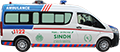
In Sindh, Sindh Integrated Emergency & Health Services (SIEHS) is leading this transformation. Through its Free Emergency Ambulance Service in Sindh – SIEHS 1122, the organisation has redefined how emergency care is delivered. By combining rapid response, advanced medical equipment, trained emergency personnel, and digital technology, SIEHS is ensuring that patients receive life-saving interventions during the most critical moments of their lives.
One of the most important concepts in emergency medicine is the Golden Hour.
The Golden Hour refers to the first sixty minutes after a serious injury or acute medical emergency. During this period, prompt medical intervention can significantly improve survival rates and reduce long-term complications.
Patients experiencing heart attacks, strokes, severe bleeding, traumatic injuries, respiratory distress, or loss of consciousness often require immediate treatment. Every minute of delay increases the risk of irreversible damage.
Unfortunately, traffic congestion, long travel distances, lack of medical resources, and delayed decision-making often consume these valuable minutes. This is where SIEHS 1122 plays a critical role. By bringing emergency medical care directly to patients, the organisation helps preserve vital organ function and stabilise patients before they arrive at a healthcare facility. This approach increases survival rates and improves overall clinical outcomes.
Healthcare systems worldwide are increasingly adopting Value-Based Healthcare models.
Under this approach, healthcare providers focus on delivering better patient outcomes rather than simply increasing service volume. Early intervention, preventive care, faster recovery, and reduced hospital admissions are key indicators of success.
Emergency medical services play an important role in this model.
When emergency teams respond quickly and begin treatment immediately, they reduce the likelihood of severe complications. Patients often require shorter hospital stays and fewer intensive medical procedures.
SIEHS has built its emergency response system around these principles.
When a citizen call 1122, a highly coordinated response network activates instantly. Dispatch teams identify the nearest available ambulance, communicate with emergency medical personnel, and guide resources to the patient’s location.
This process allows treatment to begin as early as possible.
Instead of waiting for hospital admission, patients receive critical medical attention during the first and most important stage of the emergency.
A defining feature of the Emergency Ambulance Service in Sindh operated by SIEHS is its fleet of Advanced Life Support Ambulances.
Traditional ambulances focus primarily on transportation. Advanced Life Support units, however, function as mobile treatment centres. Each ambulance is equipped with specialised medical technology designed to support critically ill and injured patients.
These ambulances carry advanced monitoring equipment, oxygen delivery systems, transport ventilators, cardiac monitoring devices, emergency medications, and other essential tools. When a patient suffers a stroke, heart attack, respiratory emergency, or major trauma, EMTs can immediately assess the situation and initiate treatment. This capability transforms the journey to the hospital into an active phase of clinical care.
As a result, patients arrive in a more stable condition, improving their chances of recovery and reducing the risk of long-term disability.
The period between the emergency scene and the hospital is often one of the most dangerous phases of a medical crisis.
Without proper intervention, patients can deteriorate rapidly. SIEHS emergency teams actively manage patient conditions throughout transport.
EMTs monitor vital signs, maintain airway support, administer oxygen, control severe bleeding, and manage breathing difficulties. In trauma cases, they take immediate steps to prevent shock and stabilise injuries.
For patients suffering from cardiovascular emergencies, early intervention can preserve heart function and improve treatment outcomes. For stroke victims, every minute saved can protect brain tissue and reduce permanent neurological damage.
These interventions demonstrate how Emergency Medical Services in Sindh are evolving from simple transportation services into essential components of modern healthcare delivery.
Accessibility is one of the core pillars of Value-Based Care.
Quality emergency care should not depend on a person’s income, social status, or geographic location. To address this challenge, SIEHS 1122 provides extensive Emergency Ambulance Coverage Across Sindh.
The network serves 30 districts across the province, including major urban centres and remote rural communities. Coverage extends to Karachi, Hyderabad, Sukkur, Larkana, Mirpurkhas, Tharparkar, Shaheed Benazirabad (Nawabshah), Dadu, and numerous other districts.
This widespread presence ensures that residents can access professional emergency medical assistance regardless of where they live. Whether a patient requires an Ambulance Service in Karachi during peak traffic hours or an emergency response in a remote rural area, SIEHS has established systems to provide timely assistance.
One of the biggest barriers to emergency healthcare is cost.
Many families hesitate to seek professional help because they worry about transportation expenses or medical fees. These delays can have devastating consequences. Recognising this challenge, the Government of Sindh supports SIEHS 1122 as a completely Free Ambulance Service in Sindh.
Citizens can access emergency transportation and medical assistance without worrying about financial burdens. This approach encourages people to seek help immediately when emergencies occur.
Early activation of emergency services allows medical teams to intervene sooner, increasing the likelihood of successful treatment and reducing avoidable deaths. By removing financial barriers, SIEHS promotes healthcare equity while supporting the broader goals of value-based healthcare.
Modern emergency care depends heavily on technology.
SIEHS integrates advanced digital tools to improve response times and enhance operational efficiency. The organisation uses GPS-enabled dispatch systems to identify the nearest available ambulance and determine the fastest route to the emergency location.
This technology helps reduce delays caused by traffic congestion and geographical challenges. In addition, citizens can access emergency services through the HOPE 24/7 mobile application.
The app enables users to request assistance quickly and monitor ambulance movements in real time. This transparency provides reassurance to families and helps reduce panic during emergencies. It also improves coordination between dispatch centres, ambulance crews, and healthcare facilities.
Effective healthcare systems require more than emergency transport.
Not every medical concern requires an ambulance or hospital visit.
To address this need, SIEHS operates Tele-Tabeeb 1123, a 24-hour telemedicine platform that connects citizens with qualified healthcare professionals. Patients can receive medical advice, consultations, and guidance from trained doctors without travelling to a healthcare facility.
This service helps reduce unnecessary hospital visits and prevents overcrowding in emergency departments. By directing non-critical cases towards virtual consultations, Tele-Tabeeb allows the SIEHS 1122 Emergency Ambulance Service to remain focused on life-threatening emergencies. The result is a more efficient healthcare system that uses resources where they generate the greatest clinical value.
The impact of SIEHS extends far beyond individual emergency responses. The organisation manages more than 24,000 calls daily and has facilitated millions of emergency interventions since its inception.
Over the years, emergency teams have responded to hundreds of thousands of road traffic accidents, medical emergencies, trauma incidents, and specialised patient transfers.
The service has also assisted with numerous childbirths during ambulance transport, helping mothers and newborns reach healthcare facilities safely. These statistics represent more than operational achievements. They reflect lives saved, disabilities prevented, and families protected from the emotional and financial consequences of medical crises.
The effectiveness of Emergency Response Services in Sindh becomes especially important during large-scale emergencies.
SIEHS has consistently demonstrated operational resilience during floods, disease outbreaks, industrial accidents, and transportation disasters.
During such events, emergency teams coordinate resources, transport patients, and provide frontline medical support to affected communities. These capabilities strengthen Sindh’s public health infrastructure and improve the province’s ability to respond to future crises.
Maintaining high standards of emergency care requires ongoing investment in people.SIEHS places significant emphasis on training, professional development, and quality assurance.
Emergency Medical Technicians receive continuous education in modern pre-hospital care practices, trauma management, cardiac emergencies, and patient stabilisation techniques. This commitment ensures consistent service quality throughout the province.
Whether responding to an emergency in central Karachi or a remote area of Tharparkar, SIEHS teams follow the same professional protocols and clinical standards. This standardisation strengthens patient trust and improves healthcare outcomes across Sindh.
As healthcare systems continue to evolve, pre-hospital care will play an increasingly important role in improving patient outcomes. The future of healthcare depends on rapid response, integrated technology, skilled medical personnel, and equitable access to services.
SIEHS has already demonstrated how these elements can work together to create meaningful value for communities. Through its Emergency Ambulance Service in Sindh, Advanced Life Support Ambulances, Tele-Tabeeb 1123, and province-wide response network, the organisation is building a healthcare model that prioritises timely intervention and better outcomes.
By transforming ambulances into mobile treatment units and treating the Golden Hour as a critical opportunity for care, SIEHS 1122 is setting a new benchmark for emergency medical services in Pakistan.
The organisation’s commitment to innovation, accessibility, and patient-centred care demonstrates how Value-Based Healthcare can protect lives, strengthen communities, and improve the future of public health across Sindh.
WhatsApp us