A bike helmet is the main protection a rider has for the head. According to the World Health Organization, a safe, quality helmet reduces the risk of death in a crash by over six times and the risk of brain injury by up to 74%.
But it only works if it is on your head and the chin strap is fastened. WHO also warns that a helmet that is not properly fastened increases the risk of death and injury.
If you see a bike accident, call 1122, keep the rider still, and do not remove the rider’s helmet unless they cannot breathe.
Karachi mein bohat se log roz bike chalate hain. Office jana ho, delivery karni ho, ya bachon ko school chhorna ho, bike sab se asaan sawari hai. Lekin bike pe aap ke sar aur sadak ke beech sirf ek cheez hoti hai: helmet.
This guide is not about which helmet to buy. It is about why a bike helmet matters, how to wear it the right way, and what to do if you are the first person to reach an injured rider.
WHO describes head trauma as the leading cause of death for motorcycle riders.
A helmet is built to take the force of an impact so your head does not take all of it. That is why WHO’s helmet manual says safe, quality helmets cut the risk of death by over six times and brain injury by up to 74%.
Helmet challan se bachne ke liye nahi, sar bachane ke liye pehna jata hai. The numbers above are about surviving a crash, not about passing a traffic check.
A helmet only protects you if it stays on your head. WHO is clear that helmets which are not properly fastened increase the risk of death and injury.
Mirror pe latka hua helmet, ya khula strap, crash mein aap ko nahi bachata. Pehnein, strap band karein, phir chalayein.
If you are the first person to reach an injured rider, you do not need to be a doctor to help. Here is what UK road safety guidance (the Highway Code) and NSW Government first aid advice tell bystanders to do.
The UK Highway Code says plainly: do not remove a motorcyclist’s helmet unless it is essential.
NSW Government guidance adds that a full face helmet should only be removed if the rider does not have a clear airway and cannot breathe. Even then, it takes two people: one holds the head and neck completely still, the other slowly removes the helmet.
Agar rider saans le raha hai, to helmet ko haath na lagayein. 1122 team ko aane dein.
This is why bystanders are asked not to move the rider. In the photo above, our paramedics fit a neck collar first and then shift the patient onto a spine board as one unit, so the head and neck stay in line. Trained hands, the right equipment, and a team working together.
Our own riders follow the same rule we are asking of you. Look at the photo at the top of this page: every rider of the SIEHS Bike Response Unit is wearing a full face helmet.
For signs to watch for after a fall, read our guides on head injury symptoms after an accident and internal bleeding symptoms after an accident. A rider who feels fine right after a crash can still have a serious injury.
Choose a helmet made to a recognised safety standard, wear it on your head, and fasten the chin strap on every ride. The World Health Organization says safe, quality helmets reduce the risk of death in a crash by over six times and brain injury by up to 74%. WHO also warns that a helmet that is not properly fastened increases the risk of death and injury.
Yes. WHO’s recommended approach is a universal helmet law, which means everyone on the bike wears a helmet, including passengers. If a child rides with you, the child needs a helmet too.
No, not unless it is essential. The UK Highway Code advises bystanders not to remove a motorcyclist’s helmet unless it is essential. NSW Government first aid guidance says a full face helmet should only be removed if the rider does not have a clear airway and cannot breathe, and that it takes two people: one keeps the head and neck still while the other removes the helmet. Call 1122 and let the paramedics handle it.
According to the World Health Organization, a safe, quality helmet reduces the risk of death in a road crash by over six times and reduces the risk of brain injury by up to 74%.
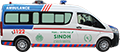
SIEHS 1122 ambulances are free for emergencies in Sindh. If you see a bike accident, do not wait for someone else to call. Dial 1122.
Not an emergency, but the rider has a headache, pain or dizziness later? Call Tele-Tabeeb 1123 and speak to a doctor for free.
SIEHS 1122 ambulances are free for emergencies in Sindh. Tele-Tabeeb 1123 is available 24/7, nationwide, in Urdu and English.
SIEHS runs on your support. Every donation helps keep the ambulance moving and the doctor on the line, free, for the families who need it most. You can also calculate your Zakat and give in one step.
This article is for general information and does not replace first aid training or medical advice. In an emergency, call 1122.
WhatsApp us