What to keep in your first aid box at home and in the office, where to store it and when to check it. A simple checklist backed by trusted medical sources.
Small injuries happen at home all the time. For example, a cut in the kitchen, a child who falls, or a finger hurt at the office. When your first aid box is ready, you can start helping straight away.
This is a simple first aid kit checklist for both home and office. The items come from pages by Mayo Clinic, MedlinePlus (NIH), Cleveland Clinic and NHS sources. In addition, each section names its source.
A first aid box is a set of supplies kept in one place for minor injuries and illness. Cleveland Clinic also calls it the “first line of treatment” for injuries at home.
For example, Cleveland Clinic lists cuts and scrapes, minor burns (including sunburn), minor sprains and strains, bug bites, and minor allergic reactions.
Yaad rakhein: a first aid box does not solve every problem. However, Cleveland Clinic says not every accident can or should be treated at home, so if you think it is an emergency, do not wait. Read what to do in a choking emergency.
Keep the box where you can grab it quickly. Cleveland Clinic compares it to a fire extinguisher, so pick the spot you would run to first in an emergency. Then tell everyone in the house where it is.
Also, Mayo Clinic says to keep kits out of the reach of young children. However, older children who can understand should be told where the kit is.
In addition, a page from an NHS Wales GP practice says the kit should be locked and kept in a cool, dry place, away from children.
Simple rule: Mayo Clinic’s advice is to keep one kit at home and one in the car. Also, the office has its own section further down.
First, the items used to cover and clean wounds. Overall, this list combines pages from Mayo Clinic, MedlinePlus and Cleveland Clinic.
Also, always read the label before using any eyewash or antiseptic product.
Next, the tools that help with almost every injury. Some of these are already in your home, so just keep them together with the box.
After that, the medicines come in the next section.
Mayo Clinic and Cleveland Clinic suggest a few over the counter medicines for the kit. They are listed below. However, this guide does not give any doses. For doses, read the medicine label or ask a pharmacist or doctor.
About aspirin: Mayo Clinic says to consider keeping aspirin in the kit. For an adult with new or unexplained chest pain, it says to get emergency help first, and then regular strength aspirin may be chewed.
Mayo Clinic also says not to take aspirin if you are allergic to it, have a bleeding disorder, take another blood thinning medicine, or a doctor has told you not to. Never give aspirin to children.
Seene ke dard mein pehle 1122 par call karein.
Important: check the expiry date of every medicine before it goes in the box. Also, a page from an NHS Wales GP practice says medicines should be checked regularly to make sure they are within their use by date.
The sources used for this guide do not give a separate office list. So the best approach is to use the home checklist above as your base.
Mayo Clinic says to tailor the kit to your activities and needs. MedlinePlus also says the contents depend on where you spend your time.
Cleveland Clinic’s advice is written for homes, but it applies to offices too: keep the kit where it can be grabbed quickly, and tell everyone where it is.
Train your team: a box is not enough, because people need to know how to use it. Read why Basic Life Support (BLS) training matters at work.
Assumption: any legal requirement for office first aid in Pakistan was not checked for this guide. Therefore, please confirm with your HR or safety officer.
A home first aid kit should have adhesive tape, elastic wrap bandages, bandage strips in assorted sizes, sterile gauze, scissors, tweezers, antiseptic, antibiotic ointment, disposable gloves, a thermometer, instant cold packs and a first aid manual. You can adjust the kit to your family’s needs.
Keep it in an easy to reach spot, much like a fire extinguisher, and tell everyone where it is. Keep it out of the reach of young children, ideally locked and stored in a cool, dry place.
Check it regularly and replace anything expired or used up. Go through it fully once a year: swap expired medicines, look for rust on metal items and replace batteries.
Common choices are pain relievers such as paracetamol (acetaminophen) or ibuprofen, an antihistamine, hydrocortisone cream, antacids and anti diarrhea medicine. Always read the label and ask a pharmacist or doctor about doses. Never give aspirin to children.
Not necessarily. Start with the home checklist, then adjust it for your staff and the activities at your workplace. We did not check any legal requirement for offices in Pakistan, so please confirm with your HR or safety officer.
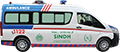
Not every accident can or should be treated at home. If you think it is truly an emergency, err on the side of caution and do not wait. In Sindh you can call 1122 for the free SIEHS ambulance. For non emergency medical advice you can call Tele-Tabeeb 1123, a free doctor service available 24/7.
Every home is different, so Cleveland Clinic says a kit should fit your family. Specifically, it points to three things to think about.
Source: Cleveland Clinic, “Here’s What Should Be in a First Aid Kit”.
A kit is not something to build once and forget. Mayo Clinic says to check it regularly, so the flashlight batteries work and expired or used up items can be replaced.
Mayo Clinic also says to write the date of last use on the kit. Many kits sit unused for years, and some items expire.
Similarly, Cleveland Clinic says to check the kit once a year.
A first aid box is for minor problems. Cleveland Clinic’s advice is clear: if you think it is truly an emergency, err on the side of caution, because waiting carries more risk.
Emergency? Call 1122. The free SIEHS ambulance service is available in Sindh. Read about the free ambulance service.
Not an emergency, but need advice? Tele-Tabeeb 1123 has a free doctor available 24/7. You can also call with questions about an injury or illness.
Also, learning first aid matters as much as having the box. Read about SIEHS community training.
Talk to a doctor from home. Read how Tele-Tabeeb 1123 works.
Open your first aid box today and then compare it with this list. Aur do number save kar lein: 1122 aur 1123.
Your donation helps keep emergency services running. Also, use our Zakat Calculator to work out your Zakat.
Disclaimer: This article is for general information only. It is not a substitute for medical advice. Therefore, ask a doctor or pharmacist before using any medicine. In an emergency, call 1122 immediately.
WhatsApp us