A racing heart, chest pain, and sudden fear can feel exactly like a heart attack. Here is how to tell a panic attack apart from a real emergency, and when to call 1122.
A racing heart, chest pain, shaking, sweating, and sudden fear can make you think something is seriously wrong. These are common panic attack ki alamat (symptoms of a panic attack). However, similar symptoms can also occur during a heart attack or another medical emergency.
So how can you tell the difference? This guide explains the common signs of a panic attack, what you can do during an episode, and when you should seek urgent medical care.
A panic attack is a sudden wave of intense fear or discomfort. It may happen during a stressful situation, but it can also begin without an obvious trigger.
The body’s natural alarm system becomes active even when there is no immediate danger. As a result, your heart rate and breathing may increase. You may also feel dizzy, sweaty, or unable to think clearly.
Although panic attacks themselves are usually not life-threatening, their symptoms can resemble serious medical conditions. Therefore, you should not diagnose sudden or unexplained symptoms on your own.
There is rarely a single cause. Prolonged stress, a traumatic event, a family history of anxiety, or an underlying health condition such as a thyroid disorder can trigger a panic attack. In some cases, an attack begins with no identifiable trigger at all.
Once the body’s stress response is activated, physical sensations, a racing heart, tight chest, or shortness of breath, can themselves become frightening. This can bring on a second wave of panic, even after the original trigger has passed.
Symptoms often peak within minutes. Most panic attacks last between 5 and 20 minutes, though some may continue for longer. Afterwards, you may feel tired, weak, embarrassed, or worried about another attack.
That fear can create a cycle: you notice a physical sensation, assume it signals danger, and become more frightened. Consequently, the physical symptoms may feel even stronger.
The signs can differ from one person to another. However, common ghabrahat ke doray ki alamat (symptoms of a panic attack) include:
These anxiety attack symptoms may appear very suddenly and are among the most common panic attack ki alamat reported by patients.
Chest pain aur ghabrahat often occur together during a panic attack. Rapid breathing can tighten the chest muscles, and stress hormones may increase your heartbeat and create pressure or discomfort.
However, chest pain should never be dismissed simply because you feel anxious. Heart attacks can also cause fear, sweating, nausea, breathlessness, and a rapid heartbeat. In addition, problems involving the lungs, heart rhythm, blood pressure, thyroid, or medicines can sometimes produce panic-like symptoms.
Get medically assessed if the pain is new, unexplained, severe, or different from anything you have felt before.
It is not always possible to identify the cause without a medical assessment, but certain patterns can help.
Heart attack symptoms are not identical for everyone. Women, older adults, and people with diabetes may have less typical symptoms, such as breathlessness, nausea, unusual tiredness, or back and jaw pain. The American Heart Association advises taking chest discomfort, upper-body pain, shortness of breath, nausea, or lightheadedness seriously.
Panic attack vs heart attack is not a distinction you should try to settle at home when symptoms are severe or unfamiliar; get assessed instead.
Seek emergency medical help if:
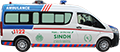
In Sindh, including Karachi, Hyderabad, Sukkur, Larkana, Mirpurkhas, Tharparkar, Nawabshah, and Dadu, dial SIEHS 1122, the free emergency ambulance service in Sindh, for 24/7 emergency ambulance response. Trained emergency medical technicians arrive with advanced life-support systems on board and begin rapid pre-hospital medical care on the spot. Do not drive yourself if you feel faint, confused, severely breathless, or have significant chest pain.
If your symptoms are stable but you need medical direction, call Tele-Tabeeb 1123, SIEHS’s free 24-hour telemedicine platform. A PMDC-certified doctor can offer a preliminary diagnosis and advise whether you need in-person or emergency care.
If there are no emergency warning signs and you have previously been medically assessed for similar episodes, take the following steps.
Sit somewhere quiet and safe. If you are driving, pull over carefully. Do not continue driving while dizzy, breathless, or unable to focus.
Take gentle, controlled breaths. Breathe in through your nose and out slowly through your mouth. Avoid taking very large or rapid breaths, as they can worsen dizziness and tingling.
Name five things you can see, four you can feel, and three you can hear. This grounding exercise can shift your attention away from frightening thoughts.
Tell yourself: “This feeling is intense, but it will pass.” Do not fight every sensation. Instead, allow your breathing and heartbeat time to settle.
A calm person can help you feel safer. They can also notice if your condition changes or emergency care becomes necessary.
Do not breathe into a paper bag. Also, avoid caffeine, cigarettes, energy drinks, and unprescribed sedatives, as these may worsen symptoms or hide an underlying problem.
Past panic attacks do not protect you from other medical problems. A new or different symptom still needs attention.
Recurring panic attacks can affect sleep, work, study, travel, and relationships. Living in constant fear of another episode is not something you have to accept.
Avoidance may provide short-term relief, but it can make the fear stronger over time. Professional support can help you return to daily activities safely.
Friends and family can provide comfort, but repeated or severe symptoms need professional assessment. A doctor can check for physical causes, and a mental health professional can then help manage panic safely.
Arrange a consultation if:
Talking therapies, such as cognitive behavioural therapy, can help you understand your triggers and break the cycle between physical sensations, fearful thoughts, and avoidance. A clinician will recommend the right course of treatment based on your specific symptoms and medical history.
For confidential mental health support, dial Tele-Tabeeb 1123 and ask to speak with a mental health professional, available 24 hours a day across Pakistan at no cost.
Knowing panic attack ki alamat can help you respond calmly, but it should not lead you to ignore unexplained physical symptoms. Chest pain, breathing difficulty, sweating, dizziness, and nausea can overlap with serious medical conditions. If symptoms are severe, new, or different, treat the situation as a possible medical emergency. In Sindh, dial SIEHS 1122 for an emergency ambulance. For medical advice or mental health counselling anywhere in Pakistan, call Tele-Tabeeb 1123. Help is free, and it is available around the clock.
Published by the SIEHS communications department — Sindh Integrated Emergency & Health Services. For emergencies dial 1122. For free telemedicine dial 1123.
No. A panic attack does not cause a heart attack, but the two can feel very similar and, in rare cases, occur close together in people with existing heart risk. Any new or severe chest pain should be medically assessed rather than assumed to be panic.
Occasional panic attacks are common, but frequent or recurring episodes are not something to simply live with. Repeated attacks are a sign to seek professional support rather than manage them alone each time.
Yes. Panic attacks can occur at any age, and the same emergency warning signs apply; severe chest pain, breathing difficulty, or loss of consciousness in a child or teenager should be treated as a medical emergency.
Dial SIEHS 1122 for a free emergency ambulance if there are any emergency warning signs. For stable symptoms or medical guidance, call Tele-Tabeeb 1123 instead.
A panic attack itself is not usually life-threatening, but its symptoms can overlap with dangerous conditions. Treat any severe, new, or unfamiliar symptom as a possible emergency until a professional rules that out.
WhatsApp us