Anxiety ki alamat can feel so physical that people mistake them for a heart, stomach or breathing problem. Here is what is happening in the body, and when to call for help.
Anxiety does not only affect your thoughts. It can change your breathing, heartbeat, digestion, sleep and energy levels. Some anxiety ki alamat (anxiety symptoms) can feel so physical that people mistake them for a heart, stomach or breathing problem.
This blog explains how anxiety affects the body, why it can cause chest pain or dizziness, how to tell it apart from a genuine medical emergency, and when to seek professional support.
Anxiety is the body’s response to a possible threat. When your brain senses danger, it releases stress hormones such as adrenaline and cortisol.
These hormones prepare you to react quickly. Your heart beats faster, your breathing changes, and your muscles become tense. Blood flow may also shift towards the muscles and away from digestion.
This response can protect you during real danger. However, it can become uncomfortable when it occurs in everyday situations or persists without a clear threat. Work pressure, financial concerns, family problems or health worries can all keep the body on alert, so physical symptoms may persist even when you are trying to rest.
The World Health Organization explains that anxiety disorders can involve excessive fear or worry alongside physical tension that affects daily life.
The physical symptoms of anxiety vary from person to person. They may appear together or affect one part of the body more strongly.
Common symptoms include:
In Pakistan, people often reach for everyday phrases before they connect these sensations to anxiety at all. Dil ghabrana (a racing, uneasy heart) or sar chakrana (a spinning head) are common ways of describing what is happening. Some people describe ghabrahat aur bechaini ki alamat (a feeling of restlessness and unease) as a constant sense that something is wrong, and only recognise the anxious thoughts behind it later.
Different parts of the body respond to anxiety in different ways.
Stress hormones can make the heart beat faster. Breathing may also become quick or shallow, leading to breathlessness, chest tightness or a pounding heartbeat. These sensations can make you feel more frightened, and that fear can then increase your heart rate further, creating a cycle of anxiety and physical discomfort.
The body often tightens its muscles when it feels under threat. Long periods of tension can cause headaches, jaw pain, shoulder stiffness and back discomfort. People sometimes treat only the pain without noticing the stress pattern behind it, but managing both the physical discomfort and the anxiety itself tends to give better relief.
The brain and digestive system communicate closely, so anxiety can affect appetite, digestion and bowel movements. You may feel nauseous before a stressful event, or develop pait kharab hona (an upset stomach), cramps, bloating, diarrhoea or constipation during prolonged stress.
An anxious mind can make it difficult to fall asleep, or cause frequent waking. Poor sleep then reduces energy and concentration, so everyday responsibilities feel harder, which can increase anxiety again.
Chest pain due to anxiety can develop from muscle tension, rapid breathing or a faster heartbeat, and it may appear during worry and ease as the body settles. But do not assume every episode of chest pain is anxiety. Heart, lung and digestive conditions can cause similar symptoms, and anxiety ki alamat can genuinely overlap with the warning signs of a real emergency.
This is especially important if you have diabetes, high blood pressure, heart disease or other medical risk factors. A healthcare professional should assess unexplained or recurring chest pain.
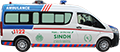
SIEHS runs a 24/7 emergency ambulance response offering rapid pre-hospital medical care, delivered by trained emergency medical technicians using advanced life-support systems. Emergency ambulance coverage across Sindh means an ambulance service in Karachi or an emergency ambulance Hyderabad callout, along with coverage in Sukkur, Larkana, Mirpurkhas, Tharparkar, Nawabshah and Dadu, is never far away.
Anxiety can change the speed and depth of your breathing. If you breathe too quickly, carbon dioxide levels in the blood may fall, making you feel dizzy, unsteady or detached from your surroundings. A racing heartbeat, tense muscles, dehydration, missed meals and lack of sleep can also contribute to dizziness aur ghabrahat.
If dizziness begins during stress, sit somewhere safe and breathe gently through your nose. Avoid repeated deep breaths, as this may worsen overbreathing.
Dizziness has many other possible causes too, including low blood sugar, dehydration, anaemia, blood pressure changes, ear conditions and medication side effects. Speak to a doctor if dizziness keeps returning or occurs without an obvious anxiety trigger. Seek urgent care if it appears with fainting, severe headache, facial drooping, weakness, confusion or difficulty speaking, as these can be stroke symptoms and need the same immediate response as a loss of consciousness.
Anxiety and panic are related, but they are not always the same experience.
Often builds gradually, connected to work, health, relationships or an upcoming event, and can remain for hours, days or longer.
Usually begins suddenly, with fear becoming intense within a short period, sometimes without a clear trigger.
Panic attack symptoms may include a racing heartbeat, chest pain, shaking, dizziness, breathlessness and fear of losing control.
The NHS notes that panic attacks commonly last between 5 and 20 minutes, though similar symptoms can occur with other medical conditions, so people should avoid diagnosing themselves. A person can experience ongoing anxiety without having panic attacks, and someone may have a panic attack during a period of extreme stress without having a long-term anxiety disorder.
Stress usually relates to an identifiable pressure, such as an exam, deadline or financial problem, and symptoms tend to ease once the situation improves. Anxiety can continue even after the immediate pressure has passed, and can feel stronger than the situation seems to require.
Common stress symptoms include poor sleep, headaches, tiredness, irritability and muscle tension. Because these overlap with anxiety, the duration and impact of symptoms matter more than the symptoms themselves.
Assuming every physical symptom is anxiety. It should not become an automatic explanation for every new symptom. A medical assessment can rule out other causes.
Repeatedly searching symptoms online. Constant symptom checking may offer brief reassurance, but it can also increase health anxiety and make normal body sensations feel threatening.
Avoiding every uncomfortable situation. Avoidance may reduce anxiety temporarily, but over time it can strengthen the belief that the situation is dangerous.
Overdoing the chai (tea) and caffeine. Tea is a daily ritual in most Pakistani households, but too much caffeine from chai, cola or energy drinks may worsen palpitations, trembling, poor sleep and restlessness.
Expecting anxiety to disappear immediately. Sleep, regular meals, physical activity, breathing techniques and professional support can help, but improvement is usually gradual rather than instant.
Notice when symptoms appear. Write down what happened before them, how long they lasted and what helped. This can reveal patterns.
Maintain regular meals and drink enough water, since hunger and dehydration can intensify dizziness, weakness and irritability. Reduce caffeine if it worsens your symptoms, aim for a consistent sleep routine, and include gentle physical activity in your week.
When anxiety rises, relax your jaw and shoulders, then slow your breathing without forcing large breaths. Focus on a longer, comfortable exhale.
Cognitive behavioural therapy (CBT) is a well-established, evidence-based approach for anxiety, and in some cases a doctor may also discuss medication. A qualified healthcare or mental health professional can help you understand your triggers and respond differently to physical sensations over time.
If your symptoms are uncomfortable but not a medical emergency, Tele-Tabeeb 1123 Telemedicine Service is SIEHS’s 24-hour telemedicine platform, connecting callers with qualified doctors for a preliminary diagnosis and advice on next steps, including patient transport if further care is needed.
Tele-Tabeeb sits alongside SIEHS’s wider community healthcare programs across Sindh, part of its role as one of the region’s core Emergency Health Services in Sindh under Sindh Integrated Emergency & Health Services (SIEHS).
Call 1123 for a preliminary diagnosis, medical advice or a mental health consultation with a qualified doctor, and guidance on next steps if further care is needed.
SIEHS 1122 and Tele-Tabeeb 1123 are free for the people who call them. If you would like to support the service, our Zakat calculator will work out what is due on your wealth.
Understanding anxiety ki alamat can help you recognise why worry sometimes feels like a physical illness. Chest discomfort, dizziness, stomach problems, headaches and muscle tension can all occur when the body remains on alert. But do not dismiss severe, new or unexplained symptoms as anxiety. A medical professional can check for physical causes and guide you towards suitable support.
For a preliminary diagnosis or mental health consultation, call Tele-Tabeeb 1123. If symptoms point to heart attack symptoms, stroke symptoms, severe bleeding, loss of consciousness or any other emergency, call the ambulance number in Sindh, 1122, for free emergency ambulance services and a rapid emergency response, immediately.
Yes. Ongoing anxiety can produce daily muscle tension, headaches, stomach discomfort, poor sleep, tiredness or palpitations. Symptoms that keep returning should still be discussed with a healthcare professional. Tele-Tabeeb 1123 offers a free consultation24 hours a day, anywhere in Pakistan.
Yes. Ongoing anxiety can produce daily muscle tension, headaches, stomach discomfort,
poor sleep, tiredness or palpitations. Symptoms that keep returning should still be
discussed with a healthcare professional. Tele-Tabeeb 1123 offers a free consultation
24 hours a day, anywhere in Pakistan.
Anxiety-related chest pain often eases as you calm down, but it cannot be safely self-diagnosed. Treat new, severe or worsening chest pain as urgent, especially if it comes with pressure spreading to the arm, shoulder, jaw, neck or back, sweating, ormarked weakness. Call SIEHS 1122 for an ambulance.
Anxiety-related chest pain often eases as you calm down, but it cannot be safely
self-diagnosed. Treat new, severe or worsening chest pain as urgent, especially if it comes with pressure spreading to the arm, shoulder, jaw, neck or back, sweating, or
marked weakness. Call SIEHS 1122 for an ambulance.
Yes. Rapid breathing, muscle tension, poor sleep and changes in heart rate can all cause dizziness aur ghabrahat. Dehydration, anaemia, low blood sugar and other conditions cause similar sensations, so persistent dizziness needs a medical review rather than an assumption.
Yes. Rapid breathing, muscle tension, poor sleep and changes in heart rate can all cause
dizziness aur ghabrahat. Dehydration, anaemia, low blood sugar and other conditions cause
similar sensations, so persistent dizziness needs a medical review rather than an
Anxiety usually develops gradually and can last for an extended period, often attached to a situation such as work, health or money. A panic attack starts suddenly and produces a short period of intense fear with strong physical symptoms. The NHS notes that a panic attack usually lasts 5 to 20 minutes.
Anxiety usually develops gradually and can last for an extended period, often attached to a situation such as work, health or money. A panic attack starts suddenly and produces a
short period of intense fear with strong physical symptoms. The NHS notes that a panic
attack usually lasts 5 to 20 minutes.
Seek support when anxiety continues for several weeks, affects your sleep or daily life, causes you to avoid normal activities, or keeps producing physical symptoms with no clear explanation. Call 1122 immediately if symptoms could represent an emergency.
Seek support when anxiety continues for several weeks, affects your sleep or daily life,
causes you to avoid normal activities, or keeps producing physical symptoms with no clear
explanation. Call 1122 immediately if symptoms could represent an emergency.
Yes. SIEHS 1122 is a free emergency ambulance service covering all 30 districts of Sindh, including Karachi, Hyderabad, Sukkur, Larkana, Mirpurkhas, Tharparkar, Nawabshah and Dadu.There are no charges, no insurance requirement and no paperwork.
Yes. SIEHS 1122 is a free emergency ambulance service covering all 30 districts of Sindh,
including Karachi, Hyderabad, Sukkur, Larkana, Mirpurkhas, Tharparkar, Nawabshah and Dadu.
There are no charges, no insurance requirement and no paperwork.
For a preliminary diagnosis or a mental health consultation, call 1123. For an emergency, call 1122.
This article is for general education and is not a substitute for professional medical care. If you are worried about your symptoms, speak to a qualified healthcare professional or call 1123. In an emergency, call 1122 immediately.
WhatsApp us