A crash scene isn’t automatically “safe” just because a few cars have stopped and a crowd has formed. Often, the crowd itself becomes the hazard—people wandering into lanes, drivers slowing to stare, sudden swerves, delayed braking. Before stepping in, take five seconds to scan for moving traffic, fuel smells, smoke, broken glass, or hanging wires.
If the area feels risky, don’t rush the patient. The most helpful first step is creating space: push people back, keep lanes clear, and reduce chaos. Heroism looks nice on camera. Preventing a second accident actually saves lives.
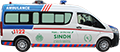
Call 1122 immediately. Not after discussions, not after filming, and definitely not after “pehle dekh lete hain.” When you call, give a usable location: the road name, a nearby landmark (flyover, petrol pump, toll plaza, major intersection), and the direction of travel (“towards the accident location”).
One small detail that saves precious minutes: send someone ahead to guide the ambulance in. At night, a phone flashlight helps. During the day, visible clothing does the job. “Near the bridge” is how emergencies turn into scavenger hunts.
This is the most common well-meaning mistake. Unless there’s immediate danger—fire, smoke, water, or oncoming traffic about to hit again—do not drag the injured person out. Neck and spine injuries don’t always look dramatic. Someone may be talking, arguing, or trying to stand and still have serious internal damage.
Yanking someone upright or pulling their arms can turn a survivable injury into permanent paralysis. Keep them still, support the head in a neutral position, and stop the crowd from turning the patient into a group project.
If there’s visible bleeding, press firmly with a cloth—yes, a dupatta works. The mistake most people make is lifting the cloth every few seconds to “check.” That breaks the clot and restarts the bleeding.
Apply pressure and hold it. If an object is lodged in the body, don’t pull it out. Stabilize it and apply pressure around the object, not on top of it.
When someone isn’t responding and isn’t breathing normally, say that clearly on the call. If you know CPR, start chest compressions while keeping the head and neck as stable as possible.
Never give water, chai, or anything sweet to someone who’s dazed or semi-conscious. Quiet choking is real—and now you’ve created a second emergency.
You don’t need to be a roadside surgeon. What actually helps is calm, boring, practical action: secure the scene, give clear information, keep the patient still, control bleeding, and stop “helpful” interference.
Do those basics well, and you genuinely change outcomes—without turning the road into chaos fueled by good intentions.
And if there’s ever any doubt, don’t negotiate with the moment. Call 1122.
WhatsApp us