A medical emergency rarely gives a warning. It can happen in hallways, cafeterias, meeting rooms, or on factory floors—right in the middle of a normal workday. Someone collapses. Someone starts choking. Someone becomes unresponsive.
In those first few minutes, confusion often takes over. People hesitate. Questions pile up: Should we call for help? Should we move them? Should we wait?That short window—before professional help arrives—can make the difference between life and death.
Basic Life Support (BLS) is not advanced medical care. It focuses on simple, practical actions that help keep someone alive until trained responders arrive.
BLS includes recognizing an emergency early, calling for help quickly, starting CPR when needed, using an Automated External Defibrillator (AED), and responding correctly to choking or breathing problems.
More than anything, BLS reduces hesitation. Instead of freezing, people know what to do next. That confidence can save critical time.
Research from Karachi shows a serious gap in emergency response. Out-of-hospital cardiac arrests are often witnessed, yet for many years, only about 2.3% of patients received CPR from a bystander. Recent data shows improvement, with bystander CPR reported in 10.3% of cases—but this still means most people do not receive immediate help before reaching a hospital.
Workplaces are one of the most practical places to improve these numbers. They already have teams, routines, and shared responsibility. Training even a portion of staff can turn uncertainty into coordinated action.
A BLS-trained workplace does not eliminate fear—but it replaces panic with readiness. Instead of everyone standing still, people move with purpose.
One person calls for help. Another starts CPR. Someone brings the AED. Others clear space and guide emergency responders when they arrive. This clear response saves time, reduces chaos, and helps protect the dignity of the person in distress.
Training also builds trust. When employees see that their organization values safety, it strengthens confidence and creates a more supportive work environment.
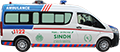
Sindh Integrated Emergency & Health Services (SIEHS), through its Research, Development & Education (RDE) function, provides First Aid and Basic Life Support training for organizations across Pakistan. These sessions are conducted for schools, hospitals, NGOs, and corporate teams.
SIEHS has also delivered workplace BLS and First Aid workshops in collaboration with partners such as Engro, helping employees gain hands-on experience and confidence in emergency response.
Not every emergency can be prevented. However, every workplace can choose how prepared it will be in the moments before help arrives.
Basic Life Support training turns bystanders into first responders—and ordinary workplaces into safer spaces for everyone. In any medical emergency, call SIEHS or dial 1122 immediately, and begin Basic Life Support while help is on the way. Early action saves lives.
WhatsApp us