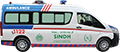
Learn to spot falij ki alamat (stroke symptoms) fast, run the FAST test, and know exactly what to do while you wait for SIEHS 1122.
Falij ki alamat (فالج کی علامات), or stroke symptoms, can appear suddenly: a drooping face, a weak arm or slurred speech. If you notice even one, call 1122 now and note the time the symptoms began. Do not give food, water, or aspirin while you wait.
The World Health Organization predicts that one in four adults will experience a stroke in their lifetime. Yet many families still wait to see whether falij ki alamat will pass on their own. Meanwhile, the brain is losing oxygen.
At Sindh Integrated Emergency and Health Services (SIEHS), call handlers manage more than 27,000 calls a day, and a suspected stroke is one call where speed changes which treatments are possible.
Falij is the everyday Urdu word for stroke. People also use it for paralysis, which is often the result of a stroke. Falij ki alamat are the sudden warning signs that blood flow to part of the brain has been interrupted.
This happens in one of two ways. A clot can block a vessel (ischaemic stroke), or a vessel can burst and bleed (haemorrhagic stroke). A transient ischaemic attack (TIA), or mini stroke, causes the same symptoms but fades. You cannot tell which type it is at home, because only a brain scan can show that.
The signs usually start suddenly:
The person does not need every symptom. Even a single sign is reason enough to call 1122.
Families rarely say “facial droop”. Instead, they describe stroke ke signs in everyday language:
Each of these is an emergency. None is something to monitor at home.
Lakwa usually refers to facial paralysis such as Bell’s palsy. Low blood sugar, migraine, and other conditions can also mimic a stroke. However, you cannot tell the difference by looking. Treat sudden facial drooping, weakness, or a change in speech as a stroke until a doctor says otherwise.
If the person has diabetes and you have a glucometer, tell the operator the reading. Never delay the call to check it.
The FAST stroke test takes under a minute. FAST stands for Face, Arms, Speech, and Time. If any one check fails, act.
Ask the person to smile. Does one side droop, or does the smile look uneven? Ask about numbness too. Mun tirha hona is the clearest visible sign.
Ask them to raise both arms and hold them there. If one arm drifts down or cannot lift, that is a warning. The leg on the same side may also be weak, so the person may stumble or struggle to stand.
Ask them to repeat a simple sentence, such as “The weather is pleasant today.” Listen for slurring, wrong words or confusion, and check whether they understand what you ask.
If you see any one of these signs, call 1122 immediately. Then note when the symptoms started, or when the person was last known to be well. Doctors use this to decide which treatment is possible.
WHO’s stroke fact sheet adds two more checks: balance (sudden dizziness or loss of coordination) and eyes (sudden vision loss). A stroke does not always affect the face, arms or speech, so sudden trouble with balance or vision should trigger the same call.
The early signs are a drooping face, weakness on one side of the body, unclear speech, and sudden loss of balance or vision. These same warning signs are also worth knowing alongside other emergency symptoms to watch for during extreme weather.
Calling immediately matters because a stroke cuts off oxygen to the brain, and brain cells begin to suffer damage within minutes. Clot-dissolving treatment only works if it is given early, and the World Health Organization says thrombolytic therapy should be carried out as soon as possible, within hours of symptom onset.
Every minute of delay narrows the options and raises the risk of lasting disability or death. Symptoms that fade within minutes may be a mini stroke. Even then, the person needs an urgent assessment, because a major stroke can follow.
Call the moment you notice one sign of falij ki alamat. Do not wait for it to worsen, and do not wait for relatives to arrive. Unsure whether to call 1122 or 1123? This simple Sindh guide to emergency vs consultation explains it in a minute. The ambulance number in Sindh is 1122, and the service is free.
Stay on the line until the operator ends the call, and follow their instructions.
The SIEHS 1122 Emergency Ambulance Service is a free emergency ambulance service in Sindh and part of the emergency health services in Sindh that SIEHS provides. It offers 24/7 emergency ambulance response with rapid prehospital medical care.
1122 ambulances arrive with emergency medical technicians and paramedics, and they carry advanced life support systems. The crew carries out a preliminary diagnosis, starts care on board and arranges patient transport to a suitable hospital. This rapid emergency response matters most in a stroke, because treatment cannot begin until the patient reaches the hospital.
Emergency ambulance coverage across Sindh spans 30 districts, including Karachi, Hyderabad, Sukkur, Larkana, Mirpurkhas, Tharparkar, Nawabshah (Shaheed Benazirabad) and Dadu. Whether you need an ambulance service in Karachi, an emergency ambulance in Hyderabad, or a free ambulance in Sindh for a village in Tharparkar, the number is the same: 1122.
First, stay with the person and keep them calm.
If you are the one with symptoms, call 1122 first. Then unlock the door, sit or lie down somewhere safe and tell a neighbour or relative. Do not drive yourself.
A stroke can affect swallowing, so food, water or tablets can enter the airway. Aspirin, including Disprin, may help some clot strokes, but it can worsen bleeding when a vessel has burst. You cannot know which type it is at home. Give nothing by mouth unless the operator or a doctor says so.
Sleep does not reverse a stroke. It also makes changes in the person’s condition harder to notice.
Massaging the limbs, forcing sweet drinks or tea, splashing water, or waiting for a local healer will not treat a stroke. Likewise, calling several relatives first or stopping at a nearby clinic that cannot scan the brain costs time. Call 1122 first, then call family.
Look for an emergency department that can carry out a CT or MRI brain scan quickly. WHO says imaging should be done as soon as a stroke is suspected, and treatment decisions depend on it. A small clinic without a scanner will only send the patient on and lose time.
You can download the HOPE 24/7 App; it has a list of nearby hospitals along with many other features, like First Aid tips including how to give CPR.
A stroke can affect people of any age. However, high blood pressure is the biggest modifiable risk. WHO reports that people with hypertension have nearly three times the risk of those without it.
Other risk factors include:
Regular blood pressure checks and taking prescribed medicines correctly reduce the risk.
For non-emergency questions about blood pressure, diabetes, or medicines, the Tele-Tabeeb 1123 telemedicine service is a free 24-hour telemedicine platform that offers basic medical advice — read the full guide to how Tele-Tabeeb 1123 works. Never use 1123 in place of 1122 for a suspected stroke.
Through its community healthcare programmes across Sindh, SIEHS also trains communities and healthcare professionals via its Department of Research, Development and Education.
1122 is the right number for more than falij ki alamat. Call it for:
If you are unsure whether it is a heart attack or a stroke, call 1122 either way.
Yes. Symptoms that fade may be a mini stroke, and a major stroke can follow. The person still needs an urgent medical assessment.
The number is 1122, and SIEHS provides the ambulance free of charge. For emergencies, always call 1122. For non-emergency medical advice, call 1123.
No, not unless a doctor or the 1122 operator tells you to. Some strokes involve bleeding, and aspirin can make that worse.
A heart attack more often causes chest pain or pressure, sweating and pain spreading to the arm or jaw. A stroke more often causes a drooping face, one weak arm or slurred speech. However, you cannot reliably tell them apart at home, so call 1122 for either.
SIEHS 1122 operates in 30 districts across Sindh, including Karachi, Hyderabad, Sukkur, Larkana, Mirpurkhas, Tharparkar, Nawabshah and Dadu. Dial 1122 from anywhere in Sindh.
Many people improve with rehabilitation. WHO advises starting it as soon as the person is medically stable, often within the first few days. Recovery depends on how severe the stroke was and how quickly treatment began.
Falij ki alamat are sudden: a crooked face, one weak arm, or speech that suddenly changes. When you see even one, do not wait. Call SIEHS 1122, note the time the symptoms started and give nothing by mouth while you wait.
Save 1122 in your phone today. Then share this guide with your family on WhatsApp, so everyone knows what to do.
WhatsApp us